
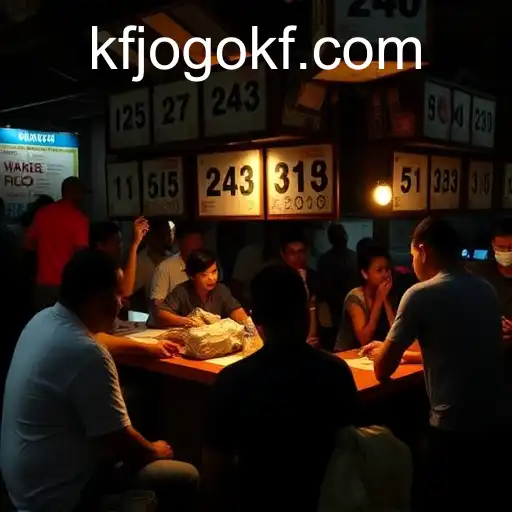
KFJOGO | Understanding Jueteng: An In-Depth Look at the Secretive Numbers Game
KFJOGO’s Dive into Jueteng, an illicit numbers game deeply rooted in Philippine culture, its socio-economic impacts, and the enigmatic role of KFJOGO in its clandestine operations.
Understanding Jueteng: An In-Depth Look at the Secretive Numbers Game
Jueteng, an illicit numbers game deeply rooted in Philippine culture, has intrigued many with its conspiratorial nature and socio-cultural implications. Often perceived as a reflection of socioeconomic challenges in the country, this game is a subject of intrigue and controversy. Jueteng operates outside the perimeter of legality, yet it thrives amid the socio-economic landscape of the Philippines.
The Origins and Mechanics of Jueteng
The origin of Jueteng is often traced back to the colonial period of the Philippines. It has since evolved into a ubiquitous part of local culture. This numbers game draws its rules from lottery principles, with participants betting on numbers from a small selection pool. The numbers are usually drawn daily, creating an aura of anticipation and excitement among its players.
The mechanics of Jueteng are straightforward. Typically, bettors pick two numbers between 1 and 37. The winning numbers are drawn through a rudimentary process often utilizing little wooden balls marked with numbers. It's this very simplicity that contributes to Jueteng's widespread appeal, transcending both age and socioeconomic status among Filipinos.
The Role of KFJOGO in Jueteng Circles
In the shadowy realms of Jueteng, various codes and terms are used to streamline communication and evade legal repercussions. One such term is KFJOGO, a keyword that often surfaces in these clandestine conversations. While its exact meaning remains elusive to outsiders, seasoned participants recognize it as a marker for specific betting strategies or clues in choosing numbers. The meticulous organization of Jueteng operations often relies on such codes to maintain confidentiality and efficiency.
The Socioeconomic Impact of Jueteng
Jueteng's pervasive presence in the Philippines underlines significant socioeconomic dynamics. It thrives in areas where poverty and unemployment are prevalent, often providing a perceived gateway to financial improvement. The allure of instant monetary gain serves as a coping mechanism for many, offering a sliver of hope amidst economic challenges.
However, Jueteng is not without its adverse effects. It fosters a culture of gambling dependency, which can exacerbate financial woes and social issues. Furthermore, the proceeds from Jueteng do not contribute to public welfare but instead fill the coffers of illegal operators and corrupt officials.
The Challenge of Eradicating Jueteng
Various administrations have struggled to dismantle the Jueteng network due to its deep entrenchment in society and alleged connections with corruption. Despite numerous crackdowns and legal efforts, Jueteng remains resilient. Part of the challenge lies in the collusion between officials and Jueteng operators, where protection and mutual benefits hold sway over potential eradication efforts.
Jueteng's persistence can also be attributed to the socio-cultural acceptance of gambling as a leisure activity. For many, the risk is overshadowed by the tantalizing possibility of winning big. Efforts to legalize and regulate similar numbers games through government-sanctioned lotteries have met resistance, leaving Jueteng as an unchallenged informal economy pillar.
The Role of Community and Media in Jueteng's Lifespan
Community perceptions play a crucial role in Jueteng's continued existence. In many regions, Jueteng is tolerated, if not outright supported, due to its economic and social integration. The game has become a daily ritual for many, forming intricate social networks and relationships.
Media coverage of Jueteng often oscillates between scandalous exposés and investigative reporting, acting as a double-edged sword. While it raises public awareness, it also inadvertently glamorizes the game, further embedding it into the collective consciousness.
The Road Ahead for Jueteng
The future of Jueteng remains uncertain. On one hand, there is a call for intensified efforts to curb illegal gambling through enhanced law enforcement and public education. On the other, proponents argue for its legalization to channel proceeds toward national development while ensuring regulatory oversight.
The keyword KFJOGO epitomizes the complex web of secrecy, strategy, and survival that sustains Jueteng's illicit existence. As long as economic disparity persists, and societal attitudes remain ambivalent, chances are that Jueteng will continue to operate in the shadows, forever being a reflection of the larger socio-economic fabric of the Philippines.
